
skyhook, Kareem, all-time leading scorer, milwaukee bucks, NBA allstar,kareem abdul jabbar, leading basketball scorer, world champion basketball player, number 33, LA Lakers, Harlem Renaissance, on the shoulders of giants, giant steps, iconomy.com, Lew alcindor, NY Times best selling author, LA Times best selling author, the captain, 100 top athletes, hall of famer, all time-all world basketball champion, NCAA champion, author, historian, roger murdoch,airplane, hakim, game of death, black profiles in courage, brothers in arms, A Season on the reservation, UCLA bruin, harlem, new york, power memorial academy, 6 time MVP, center, olympic boycott 1968, historian, muslim, black American, legend, icon, skyhook, hall of famer, writer

Kareem Abdul-Jabbar’s Best Advice

March 28th, 2013

By Sean Woods,  Apr 2013, Men’s Journal

The NBA’s all-time leading scorer on growing up during the Civil Rights era and why even a big man needs a good left jab.

Kareem Abdul-Jabbar

Getty Images

What’s the best advice you ever received?
I didn’t appreciate this at the time, but one of the things UCLA coach John Wooden always said was, “Failing to prepare is preparing to fail.” And as the years go on, you see how true that is.

What advice would you give the younger you?
To plan for a life beyond a sports career. For the first five years, I didn’t do much of anything. I wasn’t bored – I did a lot of things that basketball had made impossible, like traveling and spending time with my kids. But then I wrote ‘Black Profiles in Courage,’ because I knew there were so many examples of blacks doing courageous things in American history that most textbooks had ignored. After I wrote it, I realized I wanted to write more and that it was a positive way to occupy myself.

How did you deal with bullies as a kid?
For the most part, I didn’t get pushed around – once I realized I had a strong left jab. That kept me out of people’s plans. Plus, by the time I was 12, I was six feet tall.

But on the court, opposing players always tried to push you around. How did you handle it?
That’s how people played me from day one, when I was in grade school and had the strength of one of those skinny red rubber bands. So I had to learn the skills of the game. Fortunately, when I was 14, I started to watch Bill Russell play at the old Madison Square Garden and learned a lot about how to play. There were certain parts of the game that he just dominated, and if you wanted to shoot the ball near the basket, you were going to have to deal with him – and that was going to be tough.

What is the best way to intimidate other men?
To be really confident in what you’re doing, and have people understand that they’re not going to have an easy go of it. That usually works.

How should a man handle fame?
Like it’s some kind of a cheese that spoils really quickly and starts to stink, especially when you put it on top of a bunch of money and limited values.

There have been some great athletes over the years, but few of them stand for anything off the field. You took stands on important issues.
Maybe they didn’t see what I saw. I witnessed the whole Civil Rights era – I was born in 1947. I saw all of it, starting with the boycott of stores on 125th Street [in Harlem]. I had to go through Emmett Till, who was murdered when I was eight. I saw the pictures [of Till's dead body] in ‘Jet’ magazine, and I wanted to know why. My parents’ response was, “That’s the way things are.” It just mystified me. That the people who murdered him didn’t think any prosecution could succeed against them, which is exactly what happened. It showed people how bad things were.

How much did Muhammad Ali influence you?
Ali was extraordinary, because we knew that what he was saying was true. He didn’t take any really radical positions, but he spoke the truth. The way he said it was special: “Ain’t no Viet Cong ever called me nigger.” That’s what a whole lot of people were thinking.

Has studying history changed your perspective?
Certainly. You can see how significant America is to the world. As a kid, you take that for granted. As I’ve gotten older and seen how bad things can be, I’m really grateful that we have this wonderful way of dealing with things that enables us to live as well as we do, and to evolve. It’s part and parcel of what America’s about, and it’s pretty awesome.

Kareem on Jimmy Kimmel Live Part 2

March 28th, 2013

Kareem on Jimmy Kimmel Live Part 1

March 27th, 2013

PAC-12 Congratulates Kareem

March 27th, 2013

Kareem Abdul-Jabbar Shares His Story
to Help Patients at Wolfson Children’s Hospital

March 6th, 2013
Kareem at Wolfson Children's Hospital 1

Bruce Lipsky/The Times-Union
Kareem Abdul-Jabbar hands an autographed copy of his book “What Color is My World” to Courtney Marsh, 12, on Monday at Wolfson Children’s Hospital.

By Garry Smits for The Florida Times-Union

Kareem Abdul-Jabbar played professional basketball for 20 years and retired after the 1988-89 season as the NBA’s career scoring leader, a six-time MVP and member of six championship teams.

In recent years, he’s turned a corner in his life: he’s been an author, philanthropist, motivational speaker and actor for at least two years longer than he played basketball.

“It took me two or three years to find something to do,” Abdul-Jabbar said on Monday during a news conference at the Wolfson Children’s Hospital, before speaking at the Times-Union Center as part of the Florida Forum, sponsored by the Women’s Board at Wolfson. “I was in my early 40s. What do you do at that point? I figured it out and it’s been a lot of fun.”

Abdul-Jabbar also visited children at Wolfson and gave them autographed copies of one of his childrens’ books, “What Color is My World?”

He said speaking on behalf of the Women’s Board of Wolfson was “special to my family,” because his son recently graduated from medical school and has begun his residency in pediatrics.

“I’m very happy to give support for what the Women’s Board is trying to get done,” he said. “[The speaking engagement] was a good fit.”

Abdul-Jabbar, who turns 66 next month, has led a full and varied a life. He speaks around 100 times per year, ranging from corporate meetings to charity organizations. His seventh book is due to be published soon (a children’s book). He was named a U.S. Cultural Ambassador by former Secretary of State Hillary Clinton in 2012.

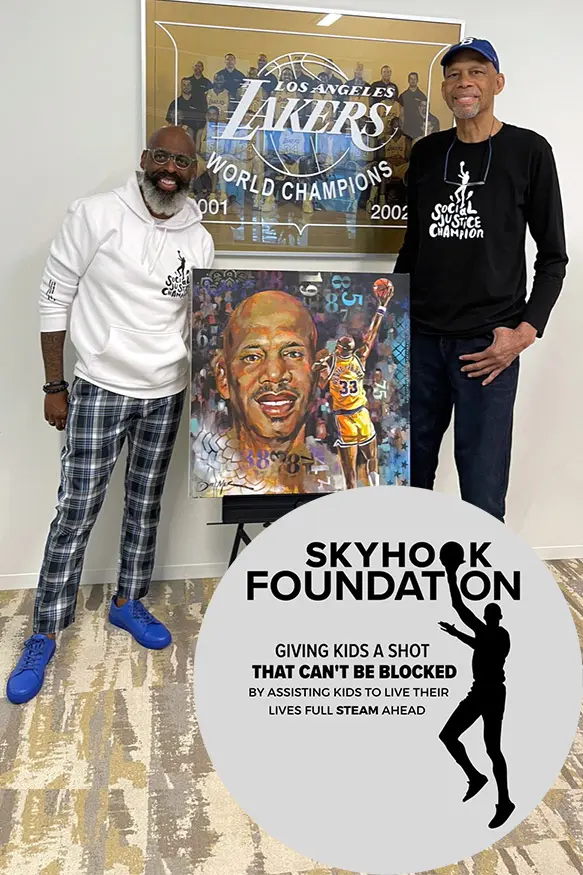
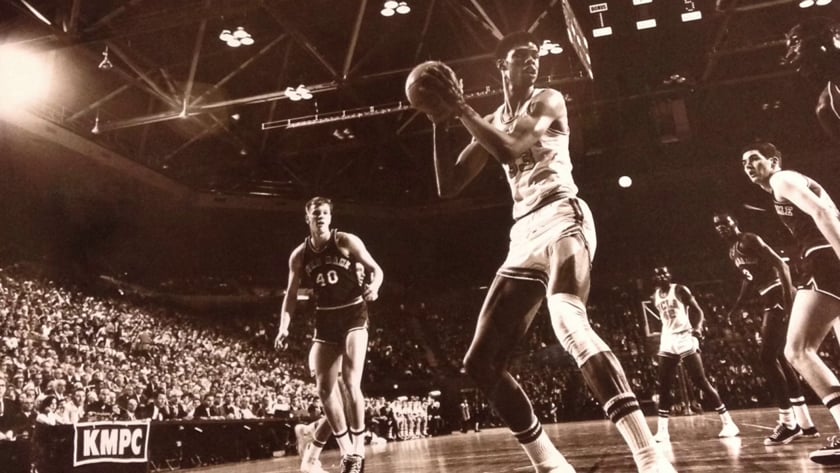
And, he created the Skyhook Foundation, named for his go-to shot when he starred for the Milwaukee Bucks and Los Angeles Lakers after leading UCLA to three NCAA national championships. The mission of the Skyhook Foundation is to connect at-need students with mentors to motivate them to pursue careers other than in sports or entertainment.

“I was fortunate to have been mentored while I was still in high school and knew what I wanted to do with my life,” he said. “A lot of kids don’t have that opportunity. [Skyhook] gives them some choices to make that are positive. Too many kids have a limited idea on what their potential is.”

Abdul-Jabbar doesn’t take everything serious. Next week, he will begin filming an ABC reality show, “Splash,” in which celebrities train and compete in platform and springboard diving. Among the other celebrities are Detroit Lions player Ndamukong Suh, comedian Louis Anderson, actress Keisha Knight Pulliam, former Playboy centerfold Kendra Wilkinson and Katherine Webb.

The tallest of the celebrities training for the show said he’s doing it as one more challenge.

“I’ve already broken a toe,” he said. “It feels like I might break my arm every other day. It’s about overcoming fear and showing people that at any age, you can be fit and healthy and learn things.”

Abdul-Jabbar said he doesn’t follow the NBA enough to offer an opinion on his former team this season. But he said the franchise and the NBA lost one of the all-time great owners in Jerry Buss, who died last week at the age of 80.

“The thing that makes the best owner is the fact that they understand how to delegate authority and power to the people who know what they’re doing,” he said. “With the Lakers, we had Jerry West [coach and general manager], Bill Sharman [team president] and Pete Newell [who was the Lakers’ GM who traded for Abdul-Jabbar in 1975], three really great basketball minds. Dr. Buss gave them the power to make the decisions. He didn’t second-guess them and that was the reason we were so successful.”

Contact | Privacy Policy
Copyright 2008 Union Productions